
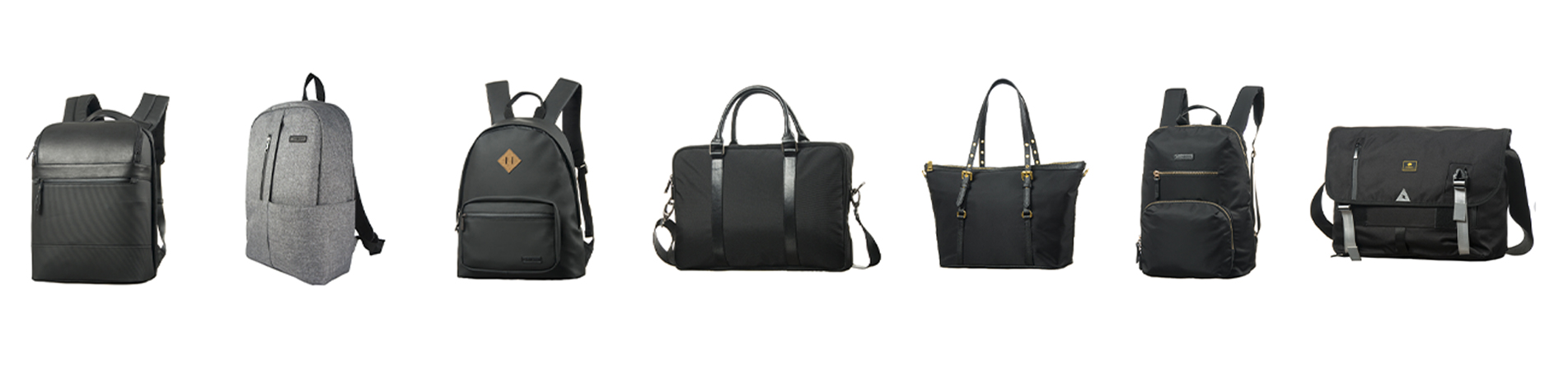
Nu het nieuwe schooljaar eraan komt, is het kiezen van een nieuwe schoolrugzak voor kinderen een belangrijk onderdeel van het 'terug-naar-schoolritueel' voor veel gezinnen. Echter, wanneer je voor een breed scala aan schoolrugzakken Met een grote verscheidenheid aan ontwerpen, functies en prijzen is de juiste keuze maken geen eenvoudige opgave. Het gaat niet alleen om een simpele aankoopbeslissing, maar ook om de gezondheid, veiligheid, studiegewoonten en zelfs de esthetische ontwikkeling van het kind. Vandaag bieden we een veelzijdige koopgids voor schoolrugzakken, vanuit een professioneel perspectief binnen de tassenindustrie, afgestemd op de groeiende behoeften van kinderen.
Dit is het belangrijkste principe bij het kiezen van een schoolrugzak, en het belang ervan weegt veel zwaarder dan dat van uiterlijk en merk.
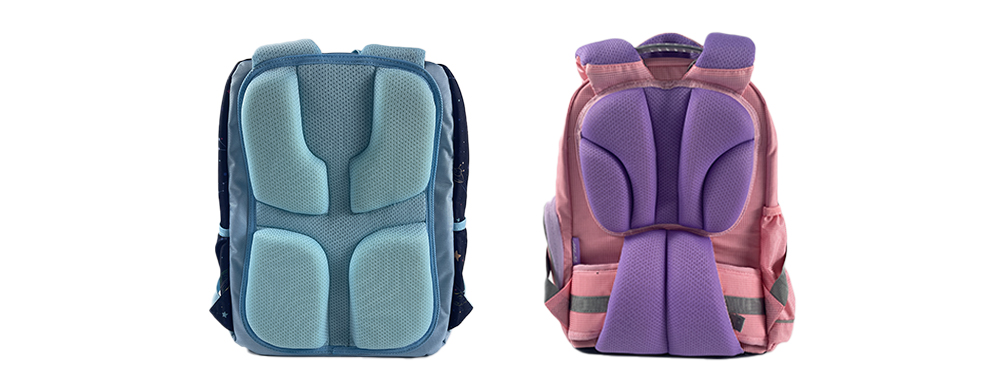
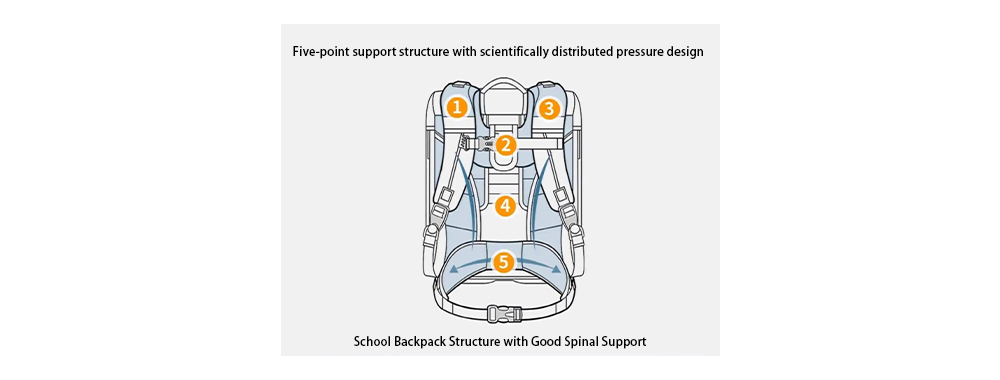
Als je een schoolrugzak oppakt en merkt dat het rugpand stijf en plat is, zonder enige kromming, en dat je er met je hand niet op kunt drukken, leg hem dan meteen neer. De menselijke wervelkolom heeft een natuurlijke kromming, geen rechte lijn. Professionele schoolrugzakken die de wervelkolom beschermen, hebben doorgaans een driedimensionaal U-vormig ontwerp. Het midden is lager, terwijl de zijkanten hoger zijn, waardoor de rugzak beter aansluit op de rug van het kind en directe druk op de wervelkolom wordt vermeden. Dit ontwerp verdeelt de druk over de spieren van de schouderbladen en de taille. Bovendien is het rugpand vaak voorzien van zeer elastisch, ademend schuim of honingraatventilatiekanalen, die stevige ondersteuning bieden zonder transpiratie te veroorzaken.
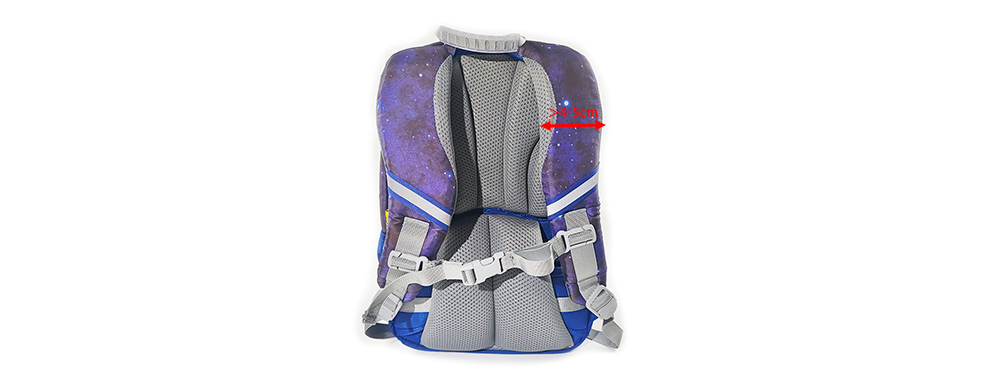
Smalle schouderbanden zijn de belangrijkste oorzaak van schouderirritatie en -pijn bij kinderen. Dunne banden concentreren het gewicht van de schooltas, vergelijkbaar met hoe een dun touwtje zware voorwerpen optilt, waardoor er direct druk op het sleutelbeen komt te staan. De industrie adviseert schouderbanden met een breedte van minimaal 4-5 cm, voorzien van een interne vulling van zeer elastisch schuim. Dit vergroot het drukverdelingsoppervlak, vermindert de druk en biedt demping.
Ouders moeten bovendien letten op de kwaliteit van de gesp waarmee de schouderbanden zijn versteld. Hoogwaardige gespen zijn doorgaans gemaakt van glad plastic, dat niet alleen roestbestendig is, maar ook huidirritatie voorkomt. Daarnaast is het belangrijk dat de stiksels rond de gesp verstevigd zijn om te voorkomen dat de banden eraf glijden wanneer het kind rent, wat tot een valpartij kan leiden.
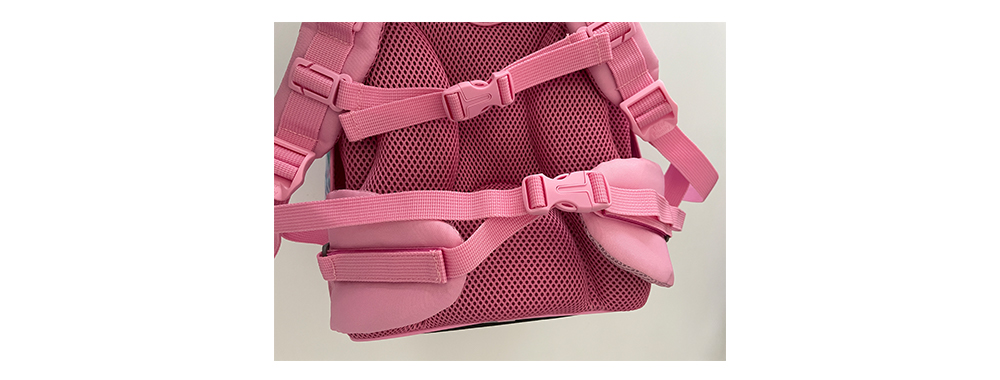
Een borstgesp en heupriem zijn essentieel, vooral voor kinderen kleiner dan 144 cm. Dit is een belangrijk kenmerk dat een gewone schoolrugzak onderscheidt van een professionele schoolrugzak die de ruggengraat beschermt. Veel schoolrugzakken hebben slechts twee schouderbanden, waardoor de tas kan gaan schommelen of verschuiven tijdens het dragen. De borstgesp zorgt ervoor dat de linker- en rechterbanden op hun plaats blijven en voorkomt dat de schoolrugzak naar de zijkanten schuift, terwijl de heupriem het belangrijkste element is. Deze verplaatst 30% tot 50% van het gewicht van de kwetsbare schouders en ruggengraat naar het sterkere bekken (heupen), waardoor een gebogen houding en een verkeerde uitlijning van de wervelkolom worden voorkomen.
Het gewicht van een lege schoolrugzak mag idealiter niet meer dan 1 kg bedragen; hoe lichter, hoe beter. Wanneer de rugzak volledig gevuld is, moet het totale gewicht binnen 10% van het lichaamsgewicht van het kind blijven. Een grotere inhoud is niet altijd beter. De juiste maat schoolrugzak moet worden gekozen op basis van de leeftijd van het kind en de spullen die het dagelijks mee moet nemen. Dit voorkomt dat het kind onbewust te veel spullen meeneemt, waardoor de rugzak te zwaar wordt.
Schoolrugzakken komen direct in contact met de huid, waardoor materiaalveiligheid een cruciale overweging is, vooral voor jonge kinderen die minder zelfbeheersing hebben, snel zweten of zelfs de neiging hebben om ergens op te bijten. Het garanderen van veilige materialen is een absolute basisvereiste.
Let op het merk, de certificering, de naleving van de normen en de materiaalbeschrijvingen. Vermijd producten zonder de juiste etikettering of producten die aan alle drie de eisen voldoen (geen merk, geen certificering, geen normen).
Als de schooltas bij het openen een sterke plastic- of parfumgeur afgeeft, kan dit wijzen op een te hoge concentratie formaldehyde, benzeen of ftalaten. Dit is met name zorgwekkend bij schooltassen met felle kleuren en plastic versieringen van lage kwaliteit. Langdurig huidcontact of blootstelling door het in de mond stoppen van de tas kan het endocriene systeem van het kind verstoren.
Geef de voorkeur aan materialen die duurzaam, milieuvriendelijk en geurloos zijn, zoals hoogwaardige polyester- of nylonstoffen. Controleer of de stiksels stevig en veilig zijn, zodat de duurzaamheid gegarandeerd is. De ritsen moeten soepel en duurzaam zijn (merkritsen zoals YKK zijn doorgaans betrouwbaarder). Zorg ervoor dat de gespen sterk zijn en niet snel breken.
Let op reflecterende strepen op de voor- en zijkanten van de schoolrugzak om de zichtbaarheid tijdens de ochtend- of avondspits te vergroten en zo potentiële verkeersrisico's te verminderen.
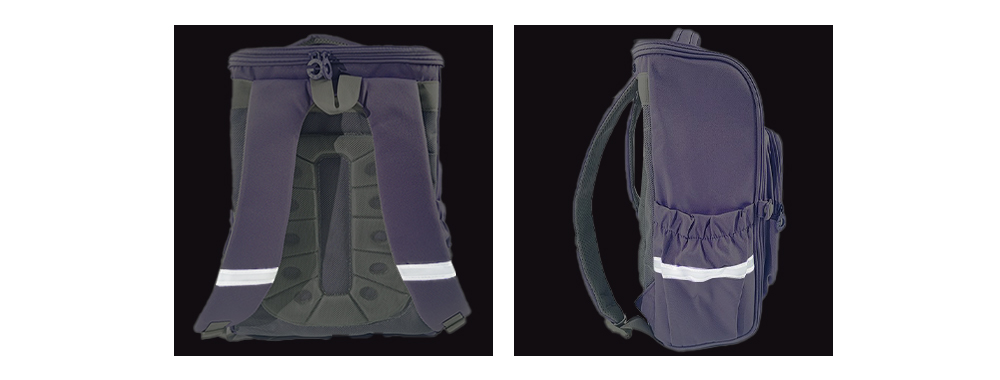
"Koop een maat groter en gebruik hem nog een paar jaar" is een veelgehoorde gedachte onder ouders bij de aanschaf van schooltassen voor hun kinderen. Een slecht passende schooltas veroorzaakt echter niet alleen ongemak tijdens het dragen, maar kan na verloop van tijd ook het risico op een verkeerde uitlijning van de wervelkolom vergroten.
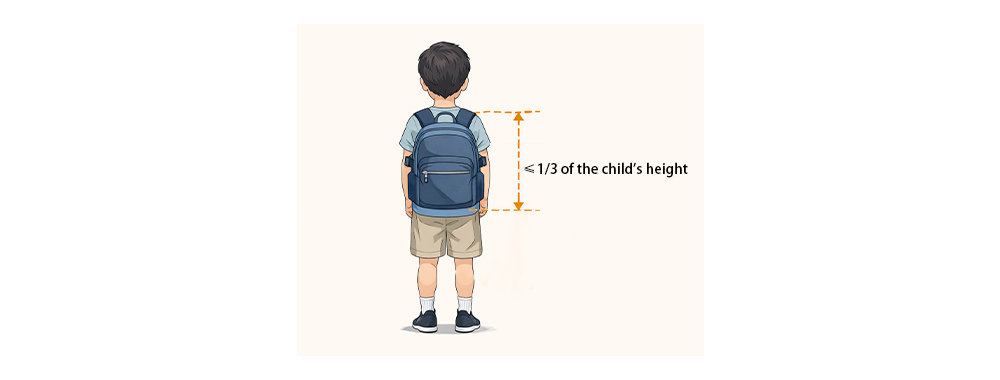
De meest nauwkeurige manier om de juiste maat te bepalen, is door het kind de schooltas te laten passen. De hoogte van de schooltas mag niet meer dan een derde van de lengte van het kind bedragen. De bovenrand van de schooltas mag niet hoger komen dan de schouders van het kind, maar mag ook niet te laag hangen om de bewegingsvrijheid van de armen niet te beperken. De onderkant van de tas moet ter hoogte van de taille (het bekken) van het kind zitten en mag nooit tot op de heupen hangen.
Kleuterleeftijd (90-110 cm): Hoogte schoolrugzak 25-30 cm
Lagere klassen basisschool (110-130 cm): Hoogte schoolrugzak 30-35 cm
Bovenbouw basisschool (130-150 cm): Hoogte schoolrugzak 35-40 cm
Middelbare schoolleeftijd (150 cm en hoger): Hoogte schoolrugzak 40-45 cm
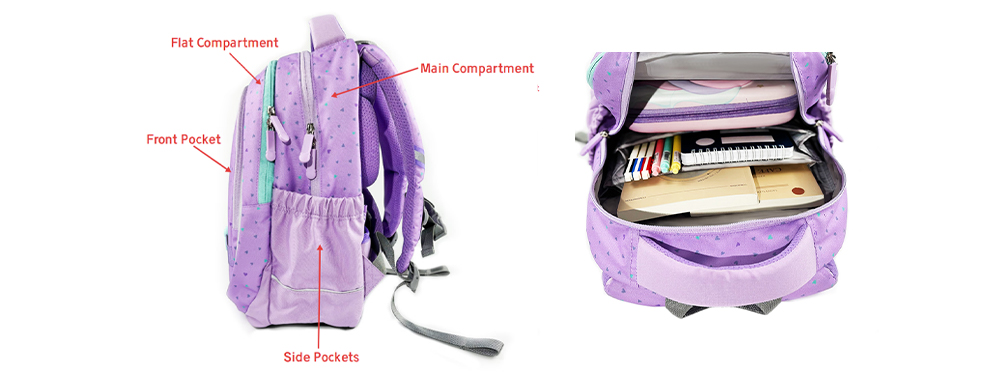
Moderne schoolrugzakken voor leerlingen hebben een verfijnd, functioneel ontwerp met verschillende compartimenten.
Hoofdcompartiment: Voor leerboeken en schriftjes.
Plat vak: voor de bescherming van elektronische apparaten.
Voorvak: voor schrijfwaren, zakdoekjes en andere veelgebruikte spullen.
Zijvakken: voor waterflessen en paraplu's.
Bovenvak: Verborgen ontwerp, meestal voor het opbergen van sleutels, toegangskaarten en andere spullen.
kleine voorwerpen.
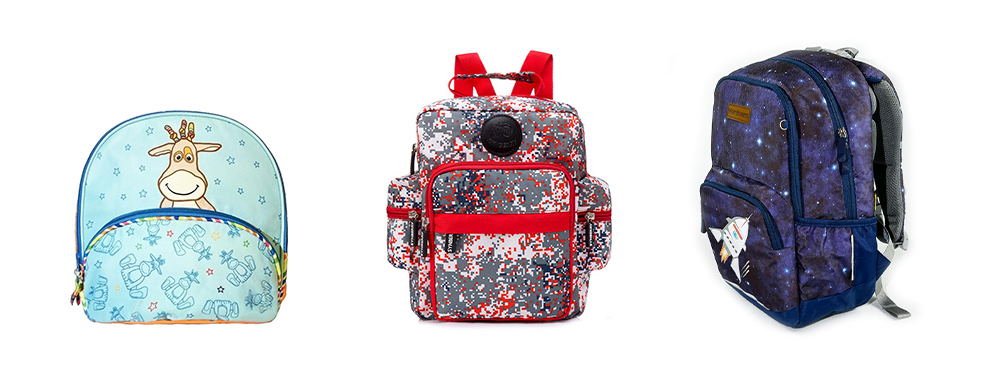
De functionele focus van schoolrugzakken verschilt in verschillende levensfasen, dus kies niet blindelings voor grotere of duurdere modellen.
Inhoud: 8-12 liter, alleen geschikt voor het meenemen van reservekleding, een waterfles en klein speelgoed.
Belangrijkste ontwerpkenmerken: Cartoonachtige ontwerpen, grote opening voor gemakkelijke toegang, lichtgewicht (<300 g)
Gebruikersbehoeften: Onafhankelijkheid bevorderen, de gewoonte ontwikkelen om spullen te ordenen en terug te leggen op hun vaste plek.
Inhoud: 15-20 liter, voor het meenemen van reservekleding, een waterfles, boeken en schrijfwaren.
Belangrijkste ontwerpkenmerken: Leuke dierenprints, functionele vakken, comfortabele schouderbanden, essentiële gesp op de borst
Gebruikersbehoeften: het bevorderen van verantwoordelijkheidsgevoel, het stimuleren van het ordenen van spullen en het bevorderen van zelfstandigheid.
Inhoud: 20-25 liter, genoeg voor het meenemen van meer schoolboeken, schrijfwaren, een waterfles en een paraplu.
Belangrijkste ontwerpkenmerken: Professionele rugbescherming, verbeterde gewichtsverdeling, minimalistisch modern design, meerdere compartimenten.
Gebruikersbehoeften: Het bevorderen van organisatorische vaardigheden, het stimuleren van zelfstandig dragen en het verbeteren van zelfredzaamheid.
Inhoud: 25-35 liter, voor het meenemen van meer studieboeken, mappen, elektronische apparaten en persoonlijke spullen.
Belangrijkste ontwerpkenmerken: Modieus en eenvoudig ontwerp, duurzame ritsen, grote capaciteit
Gebruikersbehoeften: Tijdmanagementvaardigheden ontwikkelen, schoolspullen organiseren en draagvermogen vergroten.
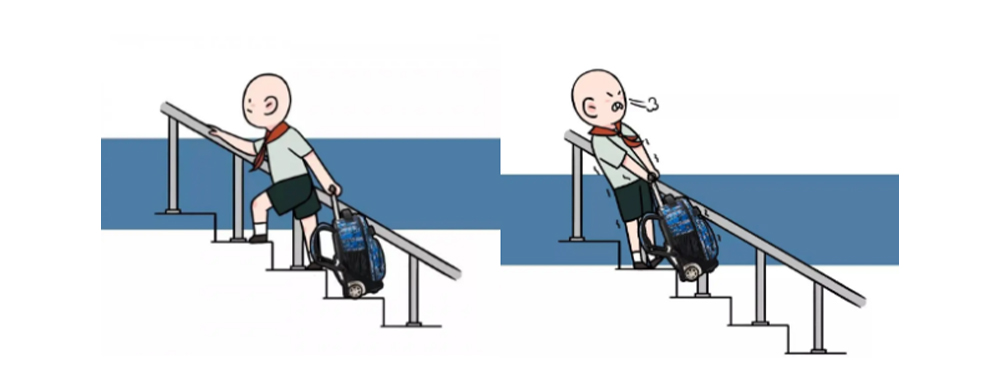
Belangrijke waarschuwing: Leerlingen van de lagere klassen moeten voorzichtig zijn met het gebruik van schoolrugzakken met wieltjes. Het op en af trekken van de rugzak de trap op en af kan gemakkelijk struikelgevaar opleveren, zowel voor het kind zelf als voor anderen. Bovendien kan langdurig gebruik van één arm om de schoolrugzak te dragen leiden tot een ongelijke spierbelasting aan beide zijden van de wervelkolom, wat mogelijk houdingsproblemen kan veroorzaken.
Lage prijs (<(100 RMB): Deze zijn meestal gemaakt van gewoon nylon met dunne rugpanelen. Ze missen over het algemeen rugbescherming en kunnen een onaangename geur hebben of het risico lopen dat de metalen onderdelen gaan roesten.
Middensegment (150-500 RMB): Dit is de prijsklasse voor de meeste gangbare schoolrugzakken met rugbescherming. In deze prijsklasse beginnen schoolrugzakken te beschikken over U-vormige rugpanelen, bredere schouderbanden, borstgespen, heupriemen, waterafstotende stoffen en goede reflecterende strepen.
Hoge prijs (>600 RMB): Deze schoolrugzakken hebben doorgaans internationale ergonomische certificeringen (bijv. Duitse IGR-certificering, AGR-certificering). Ze zijn gemaakt van hoogwaardige materialen (zoals lichter en sterker Cordura-materiaal) en het draagsysteem is biomechanisch gevalideerd (bijvoorbeeld een vermindering van de schouderdruk tot wel 66%). Deze schoolrugzakken hebben vaak ook een verfijnder ontwerp en meer aandacht voor detail.
Vanuit een professioneel perspectief in de tassenindustrieEen goede schoolrugzak is een mobiele leeromgeving, een beschermer van de gezondheid en een aanjager van zelfstandigheid. Hij combineert ergonomie, materiaalkennis, veiligheid en een aantrekkelijk design. Als ouders moeten we, wanneer we met onze kinderen een schoolrugzak uitzoeken, niet alleen vragen of hij er mooi uitziet of dat het kind hem leuk vindt, maar ook controleren of het rugpand U-vormig is, of de schouderbanden breed genoeg zijn, waar de borstgesp en reflecterende strips zitten en het kind laten voelen of de rugzak goed past. De juiste schoolrugzak kiezen is een geschenk dat de last van de groei van het kind verlicht en een stille beschermer van zijn of haar toekomstige houding.
| Auteur | ||||||
|
Lees verder, blijf op de hoogte, abonneer u en wij heten u van harte welkom om ons te vertellen wat u ervan vindt.




auteursrechten
@2024 Synberry Bag & Package Products Co.,Ltd Alle rechten voorbehouden
.
 NETWERK ONDERSTEUND
Sitemap / bloggen / Xml / Privacybeleid