
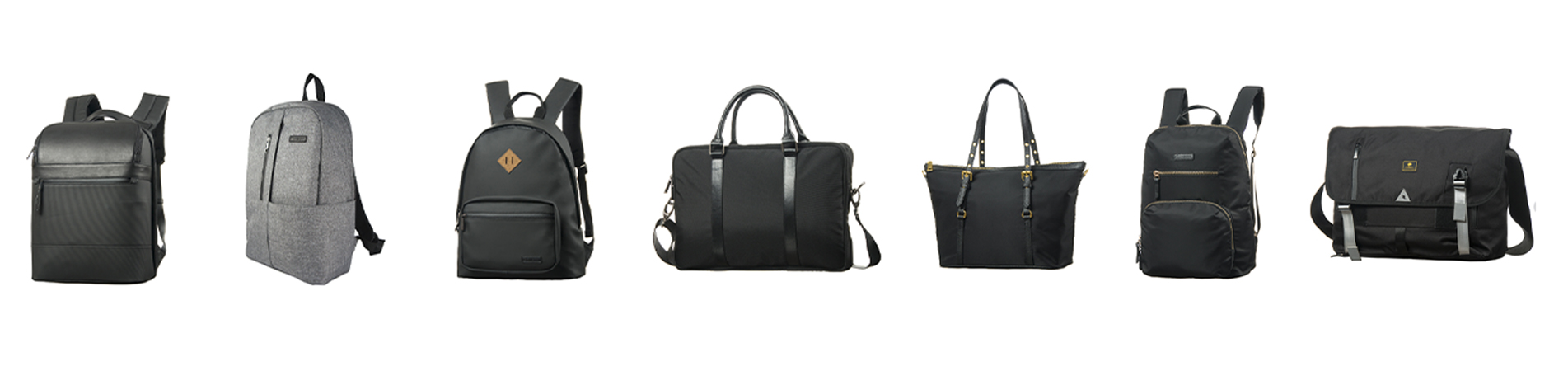
PFAS-free (free of per- and polyfluoroalkyl substances) is a claim or certification mark meaning that no PFAS has been intentionally added to a product, and that testing confirms any residual content is below the limit of detection or below specific strict thresholds. PFAS are a class of man-made chemicals known as "forever chemicals." Widely used for their water-, oil-, and heat-resistant properties, they resist degradation in the environment and may pose risks to human health.
What qualifies as "PFAS-free"?
Currently, there is no unified, mandatory legal definition of "PFAS-free" worldwide. Mainstream third-party certification bodies generally evaluate products on two levels:
•Supply-chain declaration — proving "no intentional use." The company must demonstrate that no PFAS was intentionally used in its production or sourcing processes.
•Finished-product testing — below trace limits. SGS certification, for example, requires total fluorine (TF) below 20 ppm, or total targeted PFAS below 25 ppb (depending on the test method). NSF certification likewise requires total organic fluorine (TOF) to approach zero detection.

Contents
•What is PFAS, and why is it in the textile industry?
•How do you achieve PFAS-free?
•Does going fluorine-free compromise performance?
•2026 global regulations explained
•How we help bag brands achieve PFAS compliance
•FAQ
•Conclusion
PFAS stands for per- and polyfluoroalkyl substances — a large family of synthetic chemicals defined by at least one fully fluorinated carbon atom (—CF2— or —CF3) in the molecular structure, with more than 10,000 known variants. Familiar members of the family include PFOA (perfluorooctanoic acid), PFOS (perfluorooctane sulfonic acid), and PTFE (polytetrafluoroethylene).
The defining feature of PFAS is the carbon–fluorine bond (C–F), one of the strongest bonds in organic chemistry. It gives PFAS two "superpowers":
•Extreme stability: resistant to heat, acids, alkalis, and oxidation, with virtually no degradation in nature — hence the name "forever chemicals";
•Exceptional surface performance: simultaneously repelling water, oil, and stains, which makes PFAS the most effective raw material ever used in water-, oil-, and stain-repellent finishes.

For the bag industry, PFAS are used widely. Common applications include:
•DWR (durable water repellent) finishes: the "lotus-leaf effect" water repellency on backpacks and travel bags has traditionally relied on fluorinated (C8/C6) water repellents;
•Triple-protection finishes: oil- and stain-resistant treatments, common on laptop bags, cosmetic bags, and diaper bags;
•Coating and lamination: fluorinated auxiliaries used in certain PU/PVC coating processes;
•Zippers, webbing, and sewing thread: these accessories may also carry fluorinated finishes;
•Membranes: PTFE-based waterproof-breathable membranes (used in some premium outdoor fabrics).
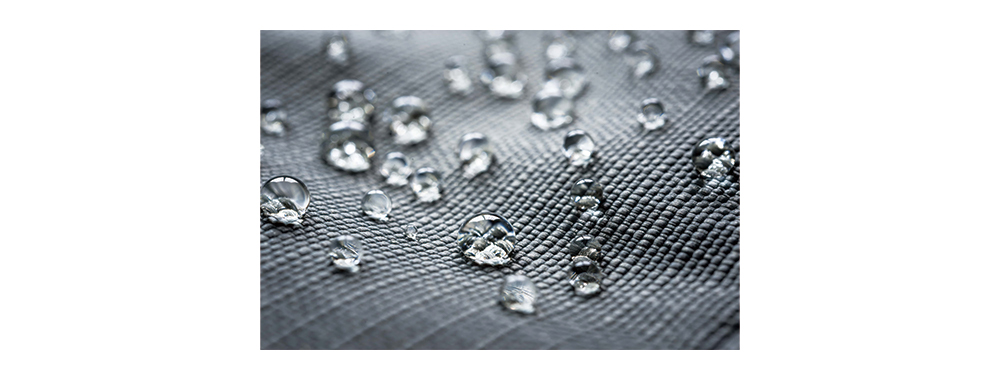
The stability of the carbon–fluorine bond is a double-edged sword. Once released into the environment, PFAS barely break down and accumulate through water systems and the food chain. Certain PFAS (such as PFOA and PFOS) have been linked to immunotoxicity, endocrine disruption, and liver and kidney damage. Both PFOA and PFOS are listed under the Stockholm Convention on Persistent Organic Pollutants (POPs) and are banned or severely restricted worldwide. In addition, the production of fluorinated water-repellent finishes is itself a significant industrial source of PFAS emissions.
In the bag industry, C8, C6, and C0 refer to the length of the fluorocarbon chain in a water repellent: C8 is the original long-chain chemistry (now largely phased out), C6 is the short-chain replacement (still a PFAS), and C0 is a fluorine-free water repellent.
Switching to fluorine-free (C0) finishes is widely recognized in the Customized bag industry as the most direct technical route. In principle, fluorine-free repellents rely on long-chain alkyl, polyurethane, or polyacrylate structures to form a low-surface-tension layer on the fiber, creating the "lotus-leaf" water-repellent effect. Compared with fluorinated finishes, their water repellency can approach similar levels, but oil and stain resistance is inherently weaker — which is why fluorine-free adoption has been slower in categories with high stain-resistance requirements, such as laptop bags and cosmetic bags.
Brands should first clarify the true functional priorities of the product: if water repellency is the core need, fluorine-free solutions are relatively mature; if oil and stain resistance is also essential, achieving it usually requires changes to fabric construction or additional functional finishes, rather than relying on a single water-repellent agent.
•Pre-treatment: Fluorine-free repellents are far more sensitive to pre-treatment cleanliness than fluorinated systems. Residual sizing, incompletely scoured oils, dye residues, and even calcium and magnesium ions in the water compete for adsorption with the active ingredients, preventing uniform film formation on the fiber surface. The visible results are low initial spray ratings, patchy "water marks," or uneven repellency. When switching to fluorine-free, the thoroughness of pre-treatment washing often matters more than repellent selection itself; an extra soaping step, or adjusted washing temperature and cycles, may be needed to ensure a clean, evenly hydrophilic fabric surface.
•Curing: Curing parameters must be reset as well. Crosslinking and orientation of fluorine-free finishes on the fiber require sufficient, uniform heat input. Under-curing produces a weak film whose performance decays rapidly with washing; excessive or uneven heat can cause a harsh hand feel, shade change, or loss of strength.
•Production-line changeover: Fluorine-free processing is extremely sensitive to cross-contamination. If a stenter or finishing bath previously handled fluorinated agents and was not thoroughly cleaned, residual fluorine alone can push total fluorine test results over the limit. Cleanliness management on the process side is, in effect, a precondition for passing compliance testing after a fluorine-free switch.
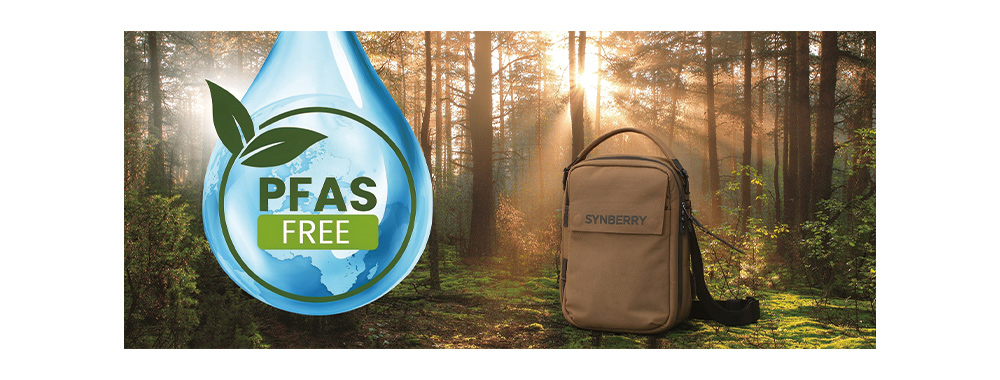
This is brands' most common concern. Objectively speaking:
•Water repellency: modern fluorine-free DWRs (C0, silicone-, wax-, dendrimer-, and polyurethane-based) can achieve initial spray ratings comparable to fluorinated products (e.g., 90–100 in spray tests) — more than enough for everyday backpacks and commuter bags;
•Wash durability: fluorine-free finishes decay slightly faster after washing; performance can be reactivated by tumble drying or low-temperature ironing, or improved by choosing durable formulations;
•Oil and stain resistance: this is the genuine weakness of fluorine-free technology — no fully equivalent replacement for the oil repellency of carbon–fluorine bonds currently exists. For categories with demanding oil-resistance requirements (such as outdoor cookware storage or industrial protective bags), compensation comes through dense fabric constructions, soil-release finishes, or liner design.
Category recommendations:
|
Category |
Recommended approach |
|
City commuter bags, laptop bags |
C0 fluorine-free DWR is sufficient; no perceptible performance difference |
|
Outdoor backpacks, travel bags |
High-performance fluorine-free DWR + water-repellent zippers + structural waterproofing |
|
Diaper bags, cosmetic bags |
Fluorine-free triple-protection alternatives; prioritize stain-resistant, soil-release finishes |
|
Professional protective / industrial use |
Monitor "essential use" exemptions in national regulations, but assess long-term supply risks |
Below is a market-by-market summary of the regulatory requirements and timelines directly relevant to bag products.
(1) POPs Regulation (in force): Regulation (EU) 2019/1021 has long prohibited the use of PFOS, PFOA, PFHxS, their salts, and precursor substances on the EU market (subject to specific exemptions).
(2) REACH Annex XVII Entry 79 — PFHxA restriction: Commission Regulation (EU) 2024/2462 provides that, from 10 October 2026, textiles, leather, fur, and footwear placed on the market for the general public must not contain PFHxA and its salts above 25 ppb in total, or PFHxA-related substances above 1,000 ppb in sum. PFHxA is the typical degradation product of C6 repellents, so this rule effectively restricts the use of short-chain fluorinated finishes in EU consumer applications.
(3) Universal PFAS restriction proposal (in progress): submitted in 2023 by Denmark, Germany, the Netherlands, Norway, and Sweden, this REACH restriction proposal targets all roughly 10,000 PFAS. Latest progress: ECHA's Risk Assessment Committee (RAC) adopted its final opinion in March 2026, confirming that the risks are sufficient to support a strict restriction; the Committee for Socio-Economic Analysis (SEAC) is expected to deliver its final opinion by the end of 2026, after which the proposal enters the European Commission's legislative process. The industry generally expects adoption around 2028–2029 — the "final act" hanging over all fluorinated materials.
(4) PPWR packaging regulation: from 12 August 2026, the EU Packaging and Packaging Waste Regulation (PPWR) imposes PFAS limits on food-contact packaging. The direct takeaway for bag brands: EU PFAS controls are spreading across all product categories.
Law No. 2025-188 (adopted in February 2025) and its implementing Decree No. 2025-1376 are currently the world's most aggressive consumer-product PFAS legislation:
|
Timeline |
Requirement |
|
1 January 2026 |
Ban on manufacturing, importing, and selling cosmetics, clothing textiles, footwear, waterproofing products, and ski waxes above PFAS thresholds |
|
31 December 2026 |
Sell-through deadline for stock produced before 2026 |
|
1 January 2030 |
Ban extends to all textiles (except industrial and defense protective uses) |
Content thresholds (aligned with the EU PPWR):
•Any single PFAS (excluding polymers): < 25 ppb
•Sum of all PFAS (excluding polymers): < 250 ppb
•Sum of all PFAS (including polymers): < 50 ppm, equivalent to 50 mg/kg total fluorine
From 1 July 2026, Denmark prohibits the import and sale of clothing, footwear, and waterproofing products with total fluorine content at or above 50 mg/kg. Using "total fluorine" as the criterion means fluorine from any source — including fluoropolymers — counts toward the limit.
•California AB 1817: from 1 January 2025, intentionally added PFAS is banned in textiles (apparel, bedding, towels, etc.), and manufacturers must provide a certificate of compliance (CoC); outdoor apparel for severe wet conditions has a transition period through 1 January 2028. California's threshold is expressed as total organic fluorine (TOF) in ppm and tightens over time.
•New York S5648: from 1 January 2025, the sale of apparel with intentionally added PFAS is banned; extreme-condition outdoor apparel follows in 2028.
•Vermont Act 131: from 1 January 2026, intentionally added PFAS is banned across multiple product categories, including textiles, cosmetics, and juvenile products.
•Other states: Washington, Colorado, Maine, and others have their own bans or reporting requirements (Maine requires reporting of intentionally added PFAS in products from 2026).
The US market is characterized by parallel state rules with inconsistent definitions. Brands typically standardize their supply to the strictest standard (dual control of total fluorine and intentional use) to avoid the complexity of splitting inventory by state.
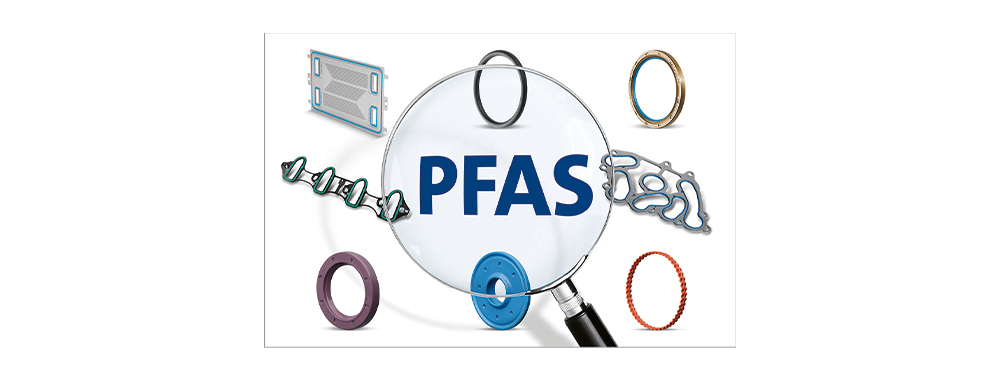
We recommend that brands state their specific compliance requirements and target markets at the inquiry stage of a waterproof backpack OEM project. Fluorine-free water repellency usually requires custom development — off-the-shelf water-repellent fabrics rarely qualify — so the standard must be locked in at this stage.
For larger backpack OEM/ODM projects, fluorine-free fabrics can be custom-developed against the target market's regulatory standards and submitted for targeted testing; costs are typically high, making this approach best suited to volume orders.
Recommended test standards: total fluorine only tells you "is there fluorine," not "which PFAS." Choose the method by material:
•Textiles: EN 17681-1:2025 (the current mainstream EU method), GB/T 31126.1-2025 (Chinese national standard);
•Leather and coated leather: ISO 23702-1:2023.
Test reports should come from an ISO/IEC 17025-accredited laboratory and correspond to specific production batches.
Passing at the sampling stage only proves that the swatch or custom fabric meets the standard. For volume bag buyers, passing pre-production bulk-sample testing is the most critical step in locking compliant fabric into production.
Bulk production often involves different fabric lots and dye lots, plus re-sourced accessories such as zippers, webbing, and sewing thread. Any process adjustment in any link can push total fluorine or targeted PFAS content back over the limit. The point of pre-production testing is therefore not to re-confirm the compliance of the material itself, but to verify that the actual combination of fabrics, accessories, and processes used in production remains consistent with the sampling stage.
Once bulk production begins, the focus of compliance management shifts from "verifying samples" to "holding the batches." Segregated incoming-material control physically isolates PFAS risk at both the warehouse and the production line:
•Material segregation: store approved fluorine-free fabrics and accessories separately from materials awaiting testing, with dedicated labels and color coding to prevent mixing or misuse;
•Line segregation: fluorine-free orders should, in principle, run on dedicated lines or in dedicated time slots;
•Supplier segregation: fix the source and formulation of each material, avoiding untraceable differences in total fluorine between "same-named" fabrics from different suppliers.
With these four stages under control, a brand can compress PFAS risk from the "uncontrollable raw-material end" down to a "traceable batch end" — achieving a closed loop of traceability from raw material to production.
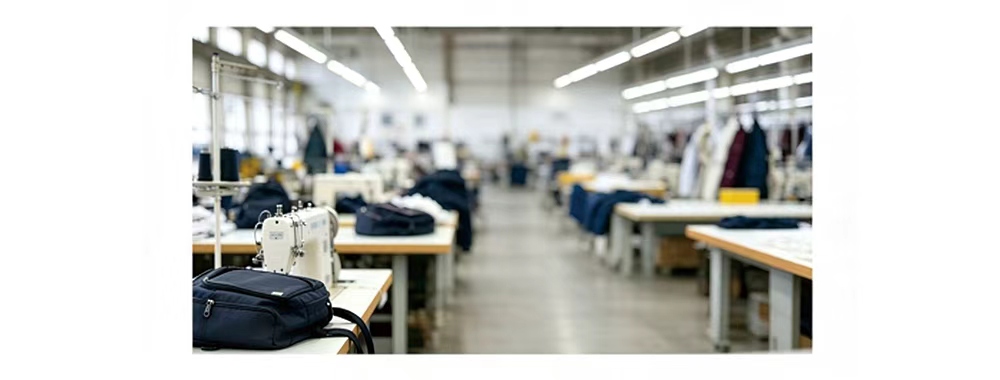
Apart from a few markets such as France and Denmark, which set mandatory limits by law, there is no unified mandatory "PFAS-free" certification worldwide. Certifications from bodies such as SGS and NSF are voluntary; their value lies in providing verifiable, third-party evidence for both "no intentional use" and "below the limit."
C0 is a formulation-level attribute — a precondition for PFAS-free, but not a sufficient condition on its own. Only when formulation, process, and testing all close the loop can C0 be converted into a PFAS-free claim that can actually be delivered to customers and regulators.
Total fluorine testing answers "is there fluorine" but not "which PFAS." For rules targeting specific substances or "intentional use" — such as the EU PFHxA restriction or California AB 1817 — total fluorine results alone are usually insufficient to demonstrate compliance; targeted PFAS testing is needed. In practice, the common approach is to use total fluorine for batch screening and add targeted testing for high-risk batches, balancing cost against compliance certainty.
The cost increase depends on fabric construction, performance requirements, and order volume — there is no single answer. Generally speaking, fluorine-free water repellency requires customization and is rarely available from stock, so the amortized cost for small orders is significantly higher. We recommend that brands state their compliance requirements and target markets clearly at the inquiry stage and have the supplier quote against the actual solution, avoiding rework caused by late changes to standards.
This must be judged market by market. France, for example, sets a sell-through deadline for stock produced before 2026, during which it may still be sold; some markets allow no transition for products placed on the market after the ban takes effect. Brands should promptly inventory the fluorine status and production dates of their stock, and build sell-through or diversion plans around each market's effective dates, so that inventory does not end up stranded.
Yes. Zippers, webbing, sewing thread, labels, and packaging materials may carry fluorinated finishes or contain fluorine themselves, and they count toward total fluorine in finished-product testing. Controlling only the main fabric while ignoring accessories is one of the most common sources of total-fluorine failures. Incoming-material segregation should include accessories and packaging, with fixed sources and formulations, ensuring the compliance of the whole product rather than a single fabric.
As the sections above show, PFAS regulation is not an isolated move by any single market but a dense network taking shape across the EU, France, Denmark, and multiple US states, with timelines highly concentrated around 2026.
For bag brands, early action pays off on three levels:
•Controllable compliance costs: selecting materials and locking in suppliers and standards early lets the cost increase of fluorine-free customization be amortized over a longer stocking cycle, rather than forcing the brand to accept rush-order premiums just before a ban takes effect.
•Supply-chain leverage: a backpack factory that can stably supply compliant fluorine-free fabrics will inevitably prioritize long-term customers with clear standards when orders flood in; brands entering late will struggle to secure capacity.
•Market trust: as end consumers and channel partners begin to care about PFAS, a brand that can produce batch-specific, lab-verifiable test reports and compliance declarations has built a competitive barrier in itself.
As a professional bag manufacturer with over 30 years of production experience, SYNBERRY BAG keeps pace with evolving market compliance requirements in practice, building deployable experience in material selection, process validation, and batch control — and turning that experience into reusable compliance workflows that help brands convert regulatory requirements into stable, deliverable product capability.
| Author | ||||||
|
Lees verder, blijf op de hoogte, abonneer u en wij heten u van harte welkom om ons te vertellen wat u ervan vindt.




auteursrechten
@2024 Synberry Bag & Package Products Co.,Ltd Alle rechten voorbehouden
.
 NETWERK ONDERSTEUND
Sitemap / bloggen / Xml / Privacybeleid