
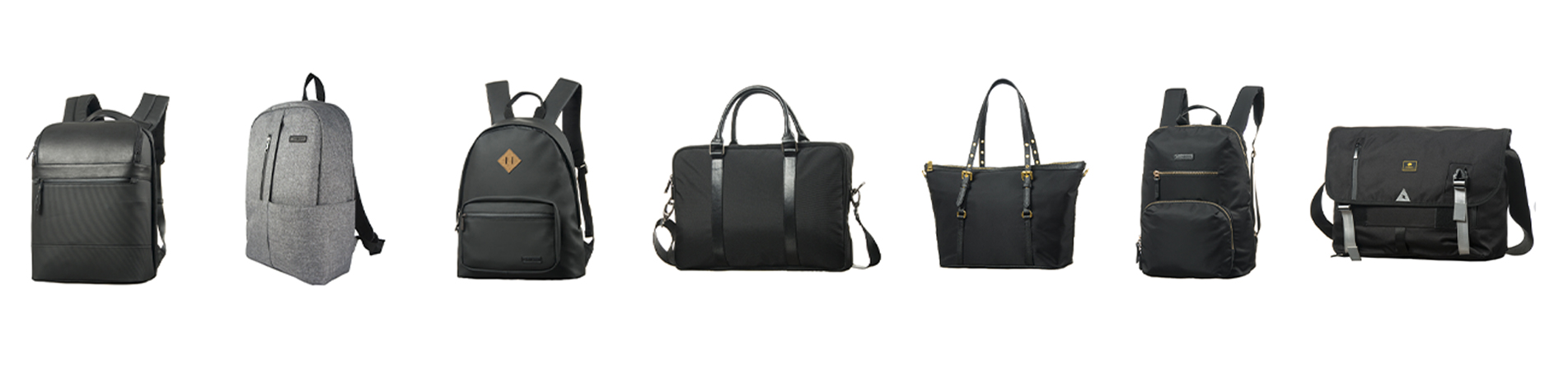
Een echt functionele sporttas is gebouwd rond drie kernelementen: een slimme indeling van de compartimenten, een effectief ventilatiesysteem en degelijke materiaalkeuze.
Deze drie elementen zijn even essentieel. De indeling van de compartimenten bepaalt of gebruikers efficiënt bij hun spullen kunnen; ventilatie heeft direct invloed op het binnenklimaat van de tas en de geurbeheersing; en de materiaalkeuze bepaalt de algehele duurzaamheid en levensduur van het product. Alleen door deze drie aspecten te optimaliseren, kan een sporttas de praktische problemen die gebruikers tijdens hun trainingen tegenkomen, daadwerkelijk oplossen.
Als OEM/ODM-fabrikant van tassen met meer dan 30 jaar ervaring in de branche, bieden wij totaaloplossingen – van ontwerp en ontwikkeling tot massaproductie – aan sportmerken in Noord-Amerika, Europa, Australië en andere wereldwijde markten.
Van technische tekeningen tot de uiteindelijke productie, onze uitgebreide productie-ervaring heeft ons één belangrijk principe geleerd: het succes van een bestseller hangt af van nauwkeurige controle over cruciale details. Ontwerpen die niet aansluiten op de werkelijke gebruikersscenario's leiden vaak tot onnodige productiekosten zonder dat dit resulteert in langdurige klantloyaliteit of herhaalaankopen.
In dit artikel, vanuit het perspectief van een professionele fabrikant van sporttassen, bespreken we hoe je een sporttas ontwikkelt die zowel partners als eindgebruikers aanspreekt. We focussen daarbij op drie essentiële aspecten: compartimentindeling, ventilatieprestaties en materiaalkeuze. Daarnaast bieden we praktische maatwerkoplossingen voor merken die OEM-partnerschappen zoeken.
Inhoudsopgave
1. Compartimentplanning
2. Ventilatieontwerp
3. Materiaalselectie
4. Aanbevelingen voor de aanschaf van sporttassen door OEM-fabrikanten
5. Wat kunnen wij als fabrikant leveren?
6. Veelgestelde vragen (FAQ)
7. Conclusie
Een goed ontworpen compartimentsysteem moet voldoen aan de werkelijke behoeften van de gebruiker en tegelijkertijd de productie-efficiëntie behouden. Overdreven complexe structuren verlengen de naaiprocessen en verhogen het aantal defecten. Een slimme ontwerpbenadering is gebaseerd op modulariteit, waardoor flexibele aanpassing mogelijk is met behoud van een sterke structurele basis.
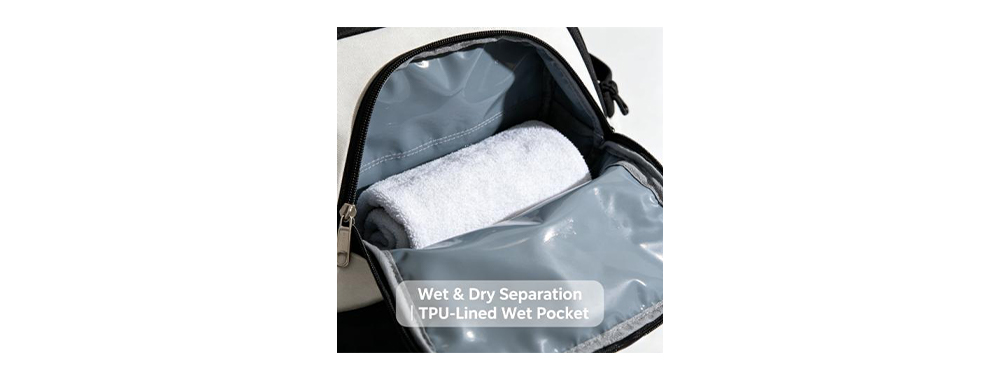
Tijdens marktonderzoek voor onze merkpartners ontdekten we dat veel sportschoolbezoekers problemen ondervinden zoals geuroverdracht tussen apparaten, schimmelvorming en vochtschade aan elektronische apparaten. Daarom is het scheiden van natte en droge producten geen marketingtruc, maar een essentiële functionele vereiste.
Onze productieoplossingen omvatten:
• Onafhankelijk nat compartiment
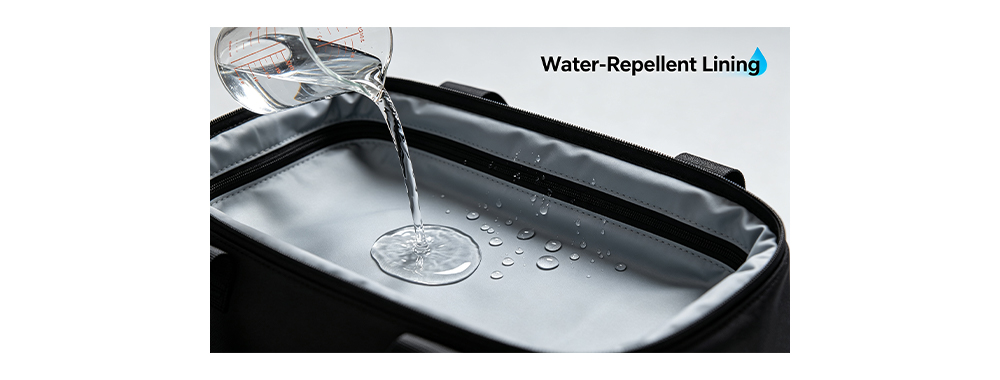
We gebruiken TPU-gelamineerde nylonstoffen in combinatie met waterdichte ritsen en gesealde naden voor effectieve vochtbescherming. Aan de onderkant van het natte compartiment kan ook een drainagesysteem worden toegevoegd. Zelfs bij lichte condensatie verzamelt het vocht zich op natuurlijke wijze in de waterdichte basislaag in plaats van in het hoofdcompartiment te lekken.
• Ontwerp van geventileerde natte ruimtes
Ademende meshpanelen en antibacteriële voeringstoffen kunnen in de binnenzijde van de deksel van het natte compartiment worden geïntegreerd om de vochtafvoer en geurbeheersing te verbeteren.
• Bescherming van het droge compartiment
Het hoofdcompartiment kan voorzien zijn van een hangende gaasstructuur die schone kleding en elektronische apparaten omhoog houdt, waardoor direct contact met de buitenwand van het natte compartiment wordt voorkomen en blootstelling aan vocht wordt verminderd.
Aanpassingsopties:
De afmetingen van het natte compartiment, de plaatsing ervan (onder/zijkant/losstaand inzetstuk) en de specificaties van de waterdichte ritssluiting kunnen allemaal worden aangepast aan de eisen van het merk.
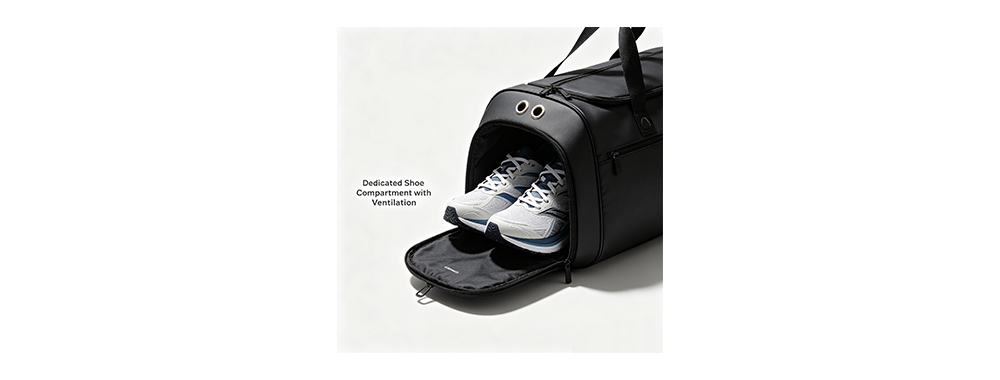
Het schoenenvak is een van de onderdelen van sporttassen waar het ontwerp het vaakst tekortschiet. Veel merken besparen kosten door slechts een dun gaasvak te gebruiken, waardoor schoengeuren zich door de hele tas kunnen verspreiden en andere spullen kunnen besmetten.
Onze standaardconfiguratie omvat:
• Het schoenenvak is gescheiden van het hoofdcompartiment en bevindt zich meestal onderin of aan de zijkant van de tas. Een stevig steunpaneel voorkomt dat de tas inklapt en beschermt het opbergvak.
• De voering van het schoenenvak is gemaakt van gemakkelijk te reinigen, gecoate stoffen die kunnen worden afgeweegd en vuilophoping voorkomen.
• Ventilatieopeningen met metalen of plastic oogjes kunnen worden toegevoegd aan de klep van het schoenenvak of het zijpaneel om de luchtcirculatie te verbeteren.
• Het schoenenvak kan zo ontworpen worden dat het, wanneer niet in gebruik, kan worden weggeklapt met klittenband of een ritssluiting, waardoor de capaciteit van het hoofdvak behouden blijft.
Aanpassingsopties:
Plaatsing van het schoenenvak (onderkant / zijkant / bovenkant), afneembare structuur, ontwerp van de ventilatieopeningen en kleuren van de voering.
Een sporttas bevat doorgaans meer dan tien verschillende spullen, waaronder sleutels, oordopjes, smartphones, powerbanks, polsbandjes, weerstandsbanden, waterflessen, shakebekers en andere trainingsaccessoires.
Een goed gepland intern organisatiesysteem zorgt ervoor dat spullen netjes opgeborgen blijven en dat gebruikers snel en gemakkelijk toegang hebben tot hun bezittingen.
Onze modulaire organisatieoplossingen omvatten:
Functioneel gebied | Opslagdoel | Productieoplossing |
Snel toegankelijk voorvak | Toegangskaarten, sleutels, oortjes | Apart ritsvak met sleutelclip (aangepaste logo-applicatie mogelijk) |
Zijvak voor fles | Waterflessen, shakebekers | Rekbaar mesh-materiaal met verstevigde stiksels aan de onderkant voor betrouwbare ondersteuning van de lading. |
Vak voor elektronische apparaten | Tablets, laptops | Verdikte vulling van parelkatoen met zachte fleecevoering voor bescherming tegen schokken en krassen. |
Organizer voor kleine spullen | Handschoenen, polsbanden, weerstandsbanden | Interne elastische banden met gaasverdelers voor een overzichtelijke organisatie. |
Hoofdcompartiment | Kleding, handdoeken, beschermende uitrusting | Ruime open structuur met optionele bevestigingslussen in de hoeken. |
Aanpassingsopties:
Aantal en positie van de compartimenten, openingsmethoden (ritssluiting / klittenband / magneetsluiting), voeringmaterialen en kleuren.
• Ritssluiting
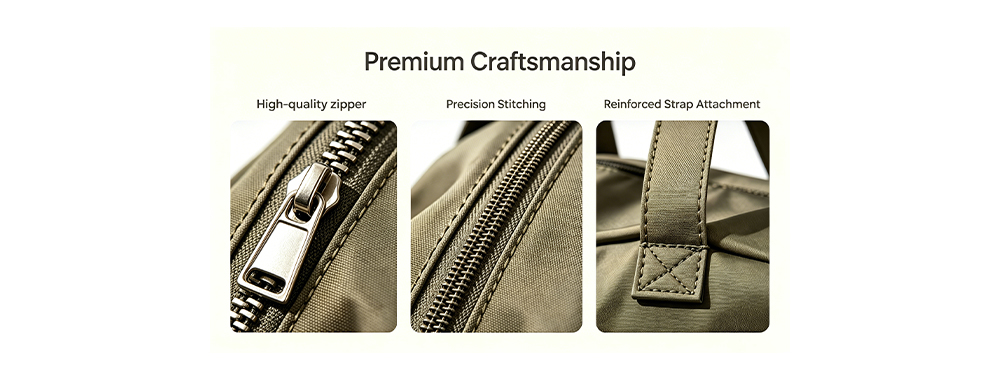
Afhankelijk van de merkpositionering kunnen we merkritsen leveren van merken zoals YKK of SBS. Aan de uiteinden van de ritsen worden verstevigingsstukken aangebracht om te voorkomen dat de rits scheurt door te veel trekkracht.
• Spanningspuntversterking
Alle onderdelen die zwaar belast worden, waaronder handgrepen, bevestigingspunten voor de schouderband en andere bevestigingspunten, zijn versterkt met meerlaags nylonweefsel. verstevigingssteken om een betrouwbare draagkracht bij dagelijks gebruik te garanderen.
• Naainormen
Er wordt gebruik gemaakt van zeer sterk polyestergaren met een constante steekdichtheid en uniforme naaikwaliteit om te voldoen aan internationale kwaliteitsnormen.
Zelfs de allerbeste materialen kunnen geen optimale gebruikerservaring bieden als de ventilatie slecht is ontworpen. Door jarenlange tests en optimalisatie hebben we vastgesteld dat de prestaties op het gebied van vocht- en warmteafvoer afhangen van de balans tussen drie belangrijke factoren: ademend vermogen van de stof, luchtstroompaden en de interne compartimentindeling.
Voor hoogwaardige sporttassen hebben we een "ademend nat compartiment"-systeem ontwikkeld met een dubbellaagse constructie:
• Buitenlaag: Nylonweefsel met hoge dichtheid en waterafstotende eigenschappen.
• Binnenlaag: Een microporeus, vochtdoorlatend membraan dat vloeibaar water tegenhoudt, maar waterdamp vrij laat ontsnappen.
• Luchtstroomkanalen: Ventilatiekanalen zijn zowel aan de boven- als onderkant van het compartiment aangebracht. Door gebruik te maken van de temperatuur- en drukverschillen die na inspanning ontstaan, kan vocht actief uit het compartiment worden afgevoerd. De exacte implementatie hangt af van de structuur en het ontwerp van de tas. Gangbare oplossingen zijn onder andere geïntegreerde gaaspanelen en ventilatieopeningen aan de zijkant.
Deze constructie biedt uitstekende vochtregulerende eigenschappen en bereikt de ideale balans tussen "het laten ontsnappen van vocht en het voorkomen van waterpenetratie".
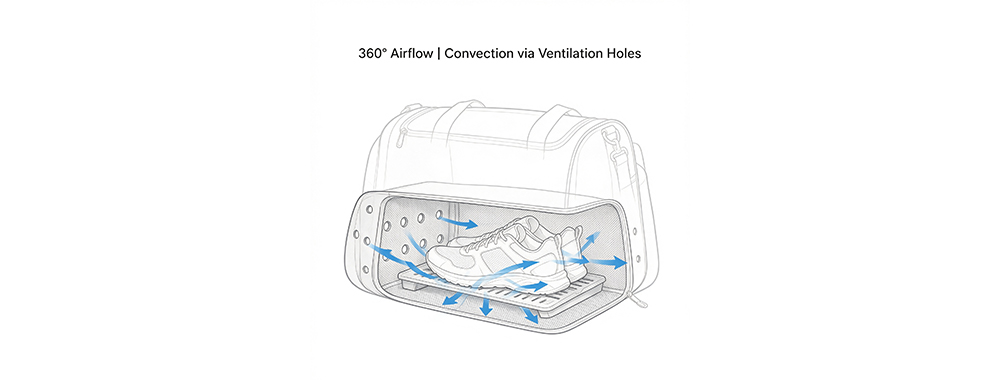
Voor schoenvakken hanteren we een principe van multidirectionele ventilatie.
In plaats van simpelweg ventilatiegaten aan één oppervlak toe te voegen, creëren we luchtkanalen door meerdere gebieden, waaronder de voor-, achter- en onderkant. De binnenkant van het schoenenvak kan ook een verhoogde bodemstructuur hebben, waardoor schoenen niet direct in contact komen met de bodem van de tas en er toch lucht onderdoor kan circuleren.
Deze continue luchtstroom helpt vochtophoping te verminderen en voorkomt geurvorming na herhaald gebruik.
Veel merken richten zich uitsluitend op interne ventilatie en negeren daarbij de delen die direct in contact komen met het lichaam van de gebruiker.
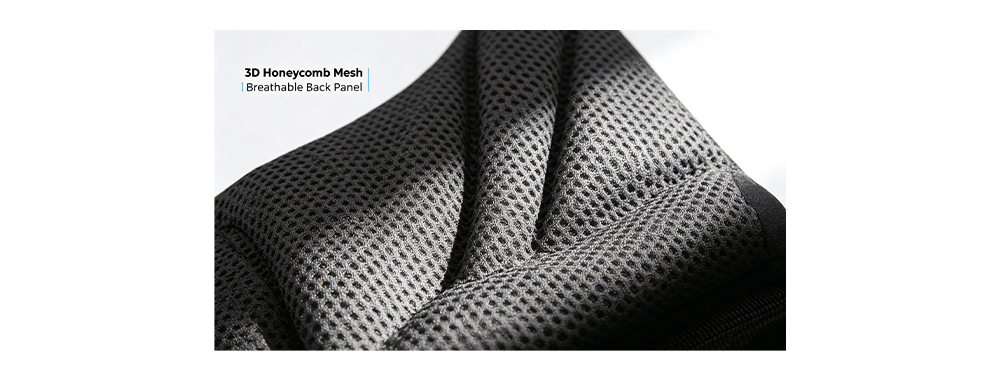
Bij al onze sporttassen zijn het rugpand en de schouderbandvulling gemaakt van 3D-honingraatgaas. De dikte, elasticiteit en veerkracht worden herhaaldelijk getest om zowel demping als efficiënte zweetafvoer te garanderen.
Dit ontwerp is bijzonder geschikt voor situaties waarin je iets over korte afstanden moet dragen, zoals van de ingang van de sportschool naar de parkeerplaats.
Aanpassingsopties:
Ontwerp van de ventilatieopeningen, kwaliteit van het vochtdoorlatende membraan, kleur, dikte en dichtheid van het gaasweefsel.
Aankoopoverwegingen:
De materiaalkeuze is een van de grootste kostenposten bij de productie van sporttassen en speelt tevens een cruciale rol in de merkpositionering en de waargenomen waarde.
Wij adviseren merken om de meest geschikte materiaalcombinatie te kiezen op basis van de beoogde verkoopprijs, verkoopkanalen en productpositionering, in plaats van simpelweg voor de duurste of goedkoopste optie te gaan.
Voor sporttassen in het midden- tot hogere segment raden we vanwege de superieure algehele prestaties het vaakst nylon aan.
Prestatie | Nylon (PA) | Polyester (PET) |
Slijtvastheid | ★★★★★ (Uitstekende slijtvastheid met een elasticiteitsherstel van circa 90%, geschikt voor toepassingen met hoge wrijving) | ★★★ (Goed) |
Scheurweerstand | ★★★★★ | ★★★☆ |
Lichtgewicht prestaties | ★★★★ (Lichter dan polyester met dezelfde denierwaarde) | ★★★ |
Weerbestendigheid | ★★★ (Vereist UV-additieven voor verbeterde bescherming) | ★★★★★ (Van nature UV-bestendig) |
Aanraken | Een zachte, soepele en hoogwaardige tactiele ervaring. | Stevigere textuur, gevoeliger voor pilling. |
Kosten | Hoger | Lager |
Onze aanbevelingen:
• Sporttassen uit het midden- tot hogere segment:
Gebruik nylon van 600D of een hogere kwaliteit om een balans te vinden tussen duurzaamheid en een laag gewicht.
• Producten van militaire kwaliteit / voor extreem gebruik:
Gebruik 1000D Cordura® nylon of ballistisch nylon voor uitzonderlijke slijtvastheid en duurzaamheid.
• Milieubewuste collecties:
Gebruik gerecycled nylon zoals ECONYL® of gerecycled polyester (RPET) met certificeringen zoals GRS om te voldoen aan de groeiende duurzaamheidseisen van de Europese en Noord-Amerikaanse markten.
Voor natte compartimenten, schoencompartimenten en tasbodems geven we de voorkeur aan een TPU-coating in plaats van de traditionele PU-coating.
De belangrijkste verschillen zijn:
TPU (thermoplastisch polyurethaan):
• Uitstekende hydrolysebestendigheid
• Betere prestaties bij lage temperaturen
• Milieuvriendelijker en beter recyclebaar
• Langere levensduur
PU (polyurethaan):
• Gevoeliger voor hydrolyse bij langdurig gebruik of in vochtige omgevingen
• Grotere kans op afbladdering, loslaten of delaminatie van de coating
Voor merken die op zoek zijn naar duurzaamheid op lange termijn en een hoogwaardige gebruikerservaring, biedt TPU een betrouwbaardere oplossing.
Al onze lamineerprocessen worden uitgevoerd onder strikte productiecontroles, waarbij de afpelsterkte de industrienormen overtreft. Als u een uitgebreid inzicht wilt krijgen in... de verschillen tussen TPU en PULees gerust onze uitgebreide vergelijkingsblog.
Hoewel voeringmaterialen en hardwarecomponenten niet altijd zichtbaar zijn voor consumenten, hebben ze een aanzienlijke invloed op de duurzaamheid van het product en de gebruikerservaring.
Voeringstof
We gebruiken doorgaans scheurvast nylon oxford-weefsel en kunnen antibacteriële en geurwerende afwerkingen aanbrengen, waaronder behandelingen op basis van zilverionen of chitosan.
Ritsen
Vakken die gescheiden zijn in natte en droge gedeeltes moeten gebruikmaken van waterdichte ritsen, waarbij het ritsband is afgedicht met een waterdichte coating om de vochtbescherming te verbeteren.
Hardwarecomponenten
Dragende hardwarecomponenten worden vervaardigd van POM (polyoxymethyleen/acetaalhars) of een aluminiumlegering.
• POM-hardware biedt een hoge hardheid, uitstekende slijtvastheid en stabiele dimensionale prestaties.
• Voor producten die bestemd zijn voor extreem koude omgevingen, wordt PA (nylon) bevestigingsmateriaal aanbevolen vanwege de superieure taaiheid bij lage temperaturen.
Duurzaamheid is de laatste jaren een steeds belangrijkere eis geworden voor Europese en Noord-Amerikaanse merken.
De milieuvriendelijke materialen waarmee we momenteel werken, zijn onder andere:
• RPET-stof (gemaakt van gerecyclede plastic flessen)
• Gerecycled nylon
• Biobased TPU
• Oplosmiddelvrije, watergedragen PU-coatings
Het is belangrijk om te weten dat gerecycled nylon momenteel beperkter beschikbaar is vanwege de complexiteit van de recyclingprocessen. Veel specificaties voor gerecycled nylon vereisen minimale bestelhoeveelheden van ongeveer 1.000 yards (ca. 935 meter) of meer.
Daarom zouden OEM-kopers van sporttassen vroegtijdig met leveranciers moeten overleggen om de materiaalinkoop, productieplanning en bestelhoeveelheden te bespreken.
Vergeleken met gerecycled nylon hebben RPET-stoffen een meer ontwikkelde toeleveringsketen en een breder scala aan direct beschikbare specificaties.
Categorie | Onze aanbevolen standaard | Onze productiecapaciteit | Geschikte merkpositionering |
Compartimentontwerp | Apart nat compartiment + schoenenvak + snel toegankelijke vakken + opbergzones voor kleine spullen | Flexibele aanpassing van het aantal compartimenten, de locatie en de openingsmethoden. | Sportmerken in het midden- tot hogere segment |
Ventilatiesysteem | Microporeus vochtdoorlatend membraan + 3D-gaasweefsel + ventilatiegaatjes | Aanpasbare dichtheid, plaatsing en structuur van de ventilatieopeningen. | Aanbevolen standaardconfiguratie voor premiummodellen |
Materialen | 600D+ nylon + TPU-coating + merkritssystemen | Diverse materiaalmogelijkheden en opties voor duurzaamheidscertificering beschikbaar. | Instapmodel: 600D nylon; Midden- tot topklasse: 840D nylon en hoger |
Vakmanschap | Verstevigde stiksels + naadafdichting + hoge steekdichtheid | Ondersteunt BSCI-, ISO- en andere fabrieksauditvereisten. | Van toepassing op het gehele productassortiment. |
Een succesvolle sporttas ontstaat niet door het toevoegen van onnodige functies. Het resultaat is juist de juiste combinatie van structuur, materialen en productietechnieken, afgestemd op de daadwerkelijke behoeften van de doelgroep.
Bent u merkeigenaar, distributeur of ontwerper? Dan heeft u nu hopelijk een beter beeld van onze expertise op het gebied van productie.
Wij zijn niet zomaar een productieleverancier die bestellingen aanneemt. Wij zijn een full-service ontwikkelingspartner die het hele proces begeleidt — van ontwerpoptimalisatie, materiaalkeuze en matrijsontwikkeling tot prototypecreatie en massaproductie.
Onze belangrijkste voordelen:
• 30 jaar ervaring in de branche
Met drie decennia expertise in de productie van tassen bedienen we al jarenlang sportmerken in Noord-Amerika, Europa, Australië en andere internationale markten. Deze ervaring geeft ons diepgaande kennis van wereldwijde kwaliteitsnormen, consumentenverwachtingen en markttrends.
• Snelle prototyping en ontwikkelingsondersteuning
We reageren snel tijdens de samplefase en werken nauw samen met merken tijdens de ontwerpcontrole en productverfijning, waardoor we concepten efficiënt kunnen omzetten in tastbare producten.
• Flexibele productiecapaciteit
Ons productiesysteem ondersteunt zowel kleinschalige proefproductie voor opkomende merken als grootschalige productie voor gevestigde bedrijven. Wij helpen klanten succesvol de stap te zetten van conceptontwikkeling naar commerciële productie.
• Streng kwaliteitscontrolesysteem
Van de inspectie van de binnenkomende materialen tot de uiteindelijke verzendingsinspectie wordt elke productiefase gecontroleerd door toegewijd kwaliteitscontrolepersoneel om ervoor te zorgen dat elke tas voldoet aan de hoge eisen van de klant.
• Complete maatwerkservice
Wij bieden complete maatwerkoplossingen, waaronder logo-applicaties (borduren, zeefdrukken, warmteoverdrachtslabels, enz.), kleuraanpassing, verpakkingen en hangtags, structurele aanpassingen en andere gepersonaliseerde wensen – zodat de merkidentiteit in elk detail wordt weerspiegeld.
Wij zijn ervan overtuigd dat een succesvolle sporttas het resultaat is van voortdurende verfijning en samenwerking tussen het merk en de fabrikant.
A: Een nat compartiment aan de onderkant zorgt voor een betere scheiding van het hoofdcompartiment en creëert een lager zwaartepunt, waardoor de stabiliteit tijdens het dragen verbetert.
Het nadeel is echter dat de toegang minder gemakkelijk is, omdat gebruikers meestal moeten bukken of de tas horizontaal moeten houden om spullen eruit te halen.
Een apart compartiment voor natte vloeistoffen aan de zijkant biedt gemakkelijker toegang en maakt de scheiding tussen natte en droge vloeistoffen visueel duidelijker voor de consument. Het neemt echter wel ruimte aan de zijkant in beslag en heeft doorgaans een beperktere opslagcapaciteit.
Vanuit productieoogpunt stellen natte compartimenten aan de onderkant hogere technische eisen aan waterdichte ritsen en bodemversteviging, terwijl natte compartimenten aan de zijkant relatief gemakkelijker te produceren zijn.
Veel hoogwaardige sporttassen op de markt hebben tegenwoordig een combinatie van een waterdicht vak aan de onderkant en een schoenenvak aan de zijkant.
A: Waterdichte ritsen maken gebruik van waterdichte folies of TPU-coatings tussen de rits tanden. Na het sluiten vormen de rits tanden een strakkere afsluiting, waardoor de kans op waterpenetratie wordt verkleind.
Zelfs als de stof zelf waterdicht is, kan er bij standaardritsen nog steeds water binnendringen via de openingen tussen de ritstanden.
Waterdichte ritsen bieden echter doorgaans een iets hogere schuifweerstand dan standaardritsen, wat betekent dat gebruikers mogelijk iets meer kracht moeten uitoefenen tijdens het gebruik. Dit is een normale eigenschap.
Voor merken die een soepelere gebruikerservaring willen, zijn er waterdichte ritsen met lage weerstand beschikbaar, hoewel deze wel hogere materiaalkosten met zich meebrengen.
A: Het belangrijkste principe bij het ontwerpen van ventilatiegaten is niet simpelweg het vergroten van het aantal gaten, maar het creëren van een effectieve luchtcirculatie in het schoencompartiment.
Wij adviseren om ventilatieopeningen aan twee tegenoverliggende zijden van het schoenenvak te plaatsen, bijvoorbeeld:
• Voor- en achterpanelen
• Zijpaneel en bodempaneel
Doorgaans worden aan elke zijde 2-3 ventilatieopeningen aangebracht, met een aanbevolen diameter van ongeveer 8-12 mm.
Hierdoor kan lucht aan de ene kant naar binnen en aan de andere kant naar buiten stromen, wat zorgt voor een natuurlijke luchtcirculatie wanneer de tas wordt bewogen.
Als alle ventilatieopeningen zich op hetzelfde oppervlak bevinden, blijft de luchtstroom beperkt tot de buitenkant en kunnen vocht en geuren niet effectief uit diepere delen van het compartiment worden verwijderd.
A: Een microporeus, vochtdoorlatend membraan bevat extreem kleine poriën, meestal met een diameter van ongeveer 0,01–0,1 μm.
Deze poriën zijn veel kleiner dan vloeibare waterdruppels (doorgaans honderden micrometers tot enkele millimeters), maar groter dan waterdampmoleculen (ongeveer 0,0004 μm).
Het resultaat:
• Vloeibaar water wordt tegengehouden door oppervlaktespanning en filtering op basis van poriegrootte.
• Waterdamp kan erdoorheen en ontsnappen.
Simpel gezegd: vloeibaar water kan er niet in, maar waterdamp kan er wel uit.
Deze membraanstructuur is echter kwetsbaar. Tijdens het naaien of de productie kunnen gaatjes van naalden of blootstelling aan overmatige hitte het membraan beschadigen en de plaatselijke vochtdoorlaatbaarheid verminderen.
Stoffen met vochtdoorlatende membranen vereisen daarom gespecialiseerde productieprocessen, zoals hoogfrequent lassen of naaien met een lage steekdichtheid in combinatie met naadafdichting, om de integriteit van het membraan te beschermen.
A: Voor dagelijks gebruik in de sportschool – zoals 3-5 keer per week sporten met kleding, waterflessen, schoenen en andere persoonlijke spullen – is 600D nylon al voldoende. Het biedt een goede balans tussen lichtgewicht en slijtvastheid.
840D nylon voelt dikker en steviger aan en heeft een aanzienlijk verbeterde scheurweerstand. Het is geschikt voor gebruikers en merken die hogere eisen stellen aan duurzaamheid.
1000D Cordura® nylon is de maatstaf voor extreme slijtvastheid. De duurzaamheid ervan overtreft ruimschoots de eisen van normale sporttassen. Tenzij het merk zich richt op robuust buitengebruik, tactische styling of extreme omstandigheden, kan deze specificatie voor de meeste sporttassen als overdreven worden beschouwd.
Wij adviseren merken om materialen te selecteren op basis van de beoogde verkoopprijs, productpositionering en merkidentiteit, in plaats van simpelweg de hoogst beschikbare specificaties te kiezen voor marketingdoeleinden.
A: Ja. Het verschil is tijdens het daadwerkelijke gebruik zeer merkbaar.
Een sporttas met een TPU-coating behoudt een glad en onbeschadigd binnenoppervlak, zelfs na één of twee jaar gebruik.
Ter vergelijking: traditionele PU-coatings – met name PU op polyesterbasis – kunnen in vochtige omgevingen na zes maanden tot een jaar tekenen van slijtage vertonen. De binnenste coating kan plakkerig worden, loslaten of afbladderen. In ernstige gevallen kunnen coatingdeeltjes aan natte handdoeken blijven kleven, wat een onaangename gebruikerservaring oplevert.
De reden hiervoor ligt in de chemische structuur van de materialen.
Traditionele PU-coatings zijn gevoeliger voor hydrolyse in warme en vochtige omgevingen. De esterbindingen in de moleculaire keten kunnen afbreken bij blootstelling aan vocht, terwijl zouten en water uit zweet dit degradatieproces versnellen.
TPU, met name TPU op polyetherbasis, biedt een aanzienlijk betere hydrolysebestendigheid dan conventioneel PU. Hoewel de materiaalkosten hoger liggen, is de extra investering de moeite waard vanuit het oogpunt van langdurige gebruikerstevredenheid en merkreputatie.
A: De onaangename geur die zich na verloop van tijd ontwikkelt, wordt meestal niet alleen veroorzaakt door restanten zweet. In plaats daarvan wordt deze voornamelijk veroorzaakt door micro-organismen en hun metabolische bijproducten in de stofstructuur.
Standaard polyesterstoffen kunnen microscopische ruimtes in hun vezelstructuur bevatten waar bacteriën en schimmels zich kunnen ophopen. Tegelijkertijd leveren de eiwitten en oliën in zweet voedingsstoffen die de groei van microben bevorderen.
Zelfs als het oppervlak na het wassen schoon lijkt, kunnen er micro-organismen diep in de vezels achterblijven. Wanneer deze opnieuw aan vocht worden blootgesteld, kunnen ze zich vermenigvuldigen en onaangename geuren afgeven.
Er zijn twee effectieve oplossingen:
1. Pas tijdens de stofafwerking antibacteriële en geurwerende behandelingen toe, zoals additieven op basis van zilverionen of chitosan.
2. Ontwikkel verwijderbare en machinewasbare binnenvoeringen, zodat gebruikers plekken die sneller vocht en geurtjes ophopen grondig kunnen reinigen.
A: Hoogwaardig gerecycled polyester (RPET) en gerecycled nylon kunnen nu qua slijtvastheid en scheursterkte prestaties bereiken die zeer dicht bij die van nieuwe materialen liggen.
Het prestatieverschil ligt over het algemeen binnen ongeveer 5%, afhankelijk van de recyclingprocessen en testnormen. Bij normaal dagelijks gebruik zullen de meeste consumenten geen significant verschil merken.
Het grootste verschil zit hem meestal in het gevoel. Stoffen van gerecycled materiaal voelen in eerste instantie misschien iets minder zacht aan dan stoffen van nieuwe materialen, maar dit verschil wordt na de eerste wasbeurt aanzienlijk kleiner.
Ook de kleurechtheid moet zorgvuldig worden beoordeeld, vooral bij donkere kleuren. Merken dienen tijdens de testfase voldoende kleurechtheidstests uit te voeren.
Voor merken met duurzaamheidsdoelstellingen zijn gerecyclede materialen een betrouwbare keuze, mits ze afkomstig zijn van gekwalificeerde leveranciers met certificeringen zoals GRS (Global Recycled Standard).
A: De reinigingsmethoden zijn afhankelijk van het materiaal waarvan de tas is gemaakt.
Sporttassen van nylon met een TPU-coating kunnen doorgaans eenvoudig worden schoongemaakt door het oppervlak af te nemen met een vochtige doek.
Als er geurtjes in de tas ontstaan, open dan het natte compartiment en het schoenencompartiment en laat ze in een goed geventileerde ruimte aan de lucht drogen. Vermijd direct zonlicht, aangezien overmatige UV-straling de materiaaleigenschappen kan beïnvloeden.
Indien machinaal wassen noodzakelijk is:
• Gebruik een mild wasmiddel.
• Was met koud water op een fijnwasprogramma.
• Verwijder alle stijve steunpanelen of inzetstukken vóór het wassen.
• Laat de tas op natuurlijke wijze aan de lucht drogen.
• Niet in de droogtrommel drogen of strijken.
Het is belangrijk om te weten dat frequent machinaal wassen – meer dan twee keer per maand – de veroudering van waterdichte coatings en gesealde naden kan versnellen.
Daarom raden we over het algemeen aan om, indien mogelijk, plaatselijk schoon te maken om de levensduur van het product te verlengen.
Een echt succesvolle sporttas is in wezen het resultaat van het vinden van de perfecte balans tussen een uitzonderlijke gebruikservaring en beheersbare productiekosten.
Zoals in dit artikel uitgebreid is besproken, dient elk technisch detail, of het nu gaat om slimme compartimentindeling, efficiënte ventilatiesystemen of duurzame materiaalkeuze, uiteindelijk één commercieel doel: het verlagen van de beslissingsdrempel voor de consument en het verhogen van de kans op herhaalaankopen op de lange termijn.
Deze filosofie weerspiegelt de waarde van SYNBERRY's meer dan 30 jaar expertise in de productie van sporttassen.
Van materiaalkeuze en naaivakmanschap tot prototypeontwikkeling en massaproductie: wij begrijpen niet alleen hoe tassen gemaakt moeten worden, maar ook hoe we merken kunnen helpen concepten om te zetten in commercieel concurrerende producten door nauwgezette aandacht voor detail.
Of u nu een nieuwe collectie sporttassen ontwikkelt of een bestaande productlijn wilt optimaliseren, zelfs als u slechts een eerste schets of concept hebt, kijken we ernaar uit om de mogelijkheden te onderzoeken om uw ideeën tot leven te brengen.
| Auteur | ||||||
|
Lees verder, blijf op de hoogte, abonneer u en wij heten u van harte welkom om ons te vertellen wat u ervan vindt.




auteursrechten
@2024 Synberry Bag & Package Products Co.,Ltd Alle rechten voorbehouden
.
 NETWERK ONDERSTEUND
Sitemap / bloggen / Xml / Privacybeleid